Freediving in Baku
Diving on a single breath. Breathing, ear equalisation, descent technique, buddy safety. From the first pool session to depth.
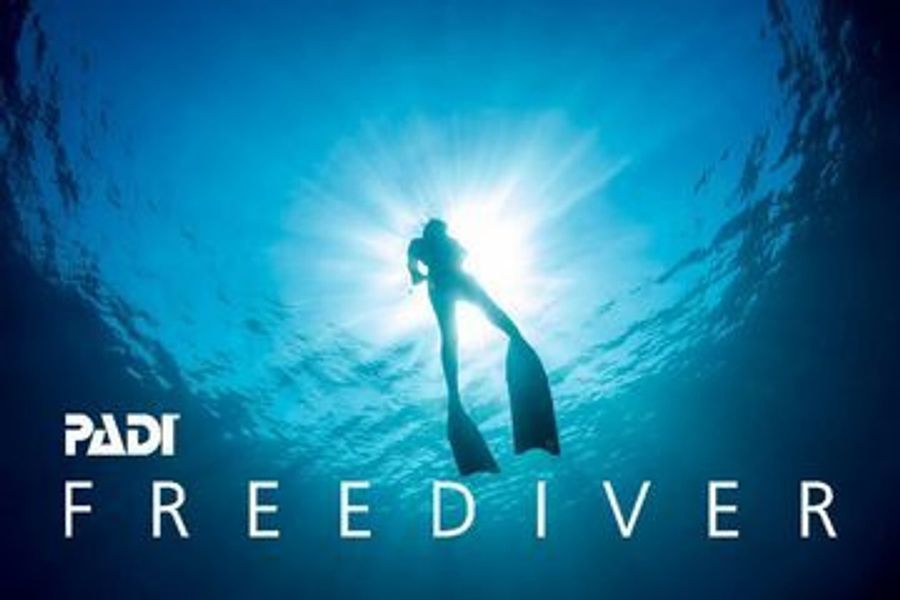
Freediving is diving on a held breath. Your kit is a mask, fins and a wetsuit — all of it fits in a backpack.
It is quiet underwater, no regulator and no bubbles, and fish let you come closer. You can dive from the shore: no tanks, no fills, no boat.
With snorkelling you look down from above, and a descent of two or three metres stops at ear pain while you still have air. What stops you is pressure and the missing equalisation technique — it is taught in the very first session.
Breath-hold grows from relaxation — extra movement, tight shoulders and hurry burn oxygen. On the course you learn to breathe before the dive, descend calmly and stay in control underwater. The same breathing techniques work on land, against stress and before sleep.
Freediving carries one serious risk: loss of consciousness from lack of oxygen during the ascent. The protocol works against it, which is why you dive in pairs only. Your buddy waits at the surface and watches you after you come up. The course is built around these rules, and you learn to cover your buddy yourself.
Sessions run at the Olympic-grade Baku Aquatics Centre pool under instructor supervision. Depth is added in steps and descents follow a line. You can turn back up at any moment.
What we teach
- Breathing before the dive, relaxation in the water, oxygen economy.
- Ear equalisation and pressure compensation at depth.
- Static (breath-hold at the surface, face down) and dynamic (distance underwater).
- Constant weight descent: down and back under your own power.
- Buddy safety and what to do if someone blacks out.
- An international PADI certification.
What we ask of you
Be confident in the water. Complete a medical questionnaire. No scuba experience needed.
Four levels
The programme is split into steps. Each one adds depth, time underwater and new technique.
A programme for children aged 12 to 14 with depth limits. The same skills adults learn.
The start. Breathing, equalisation, static, dynamic and first constant-weight dives.
More depth and more time underwater. Free immersion is added: descending and ascending the line by hand, without fins.
Performance level. Variable weight (descent with extra ballast) and dive planning.
Everyone starts at Freediver, scuba divers included. The next steps are taken at your own pace, and a gap between them makes no difference.
In freediving a certification matters less than in scuba: the kit is your own and nobody checks a card on the beach. It opens freediving sessions at pools and clubs abroad, line training at depth and organised trips.
What a PADI card gives you →